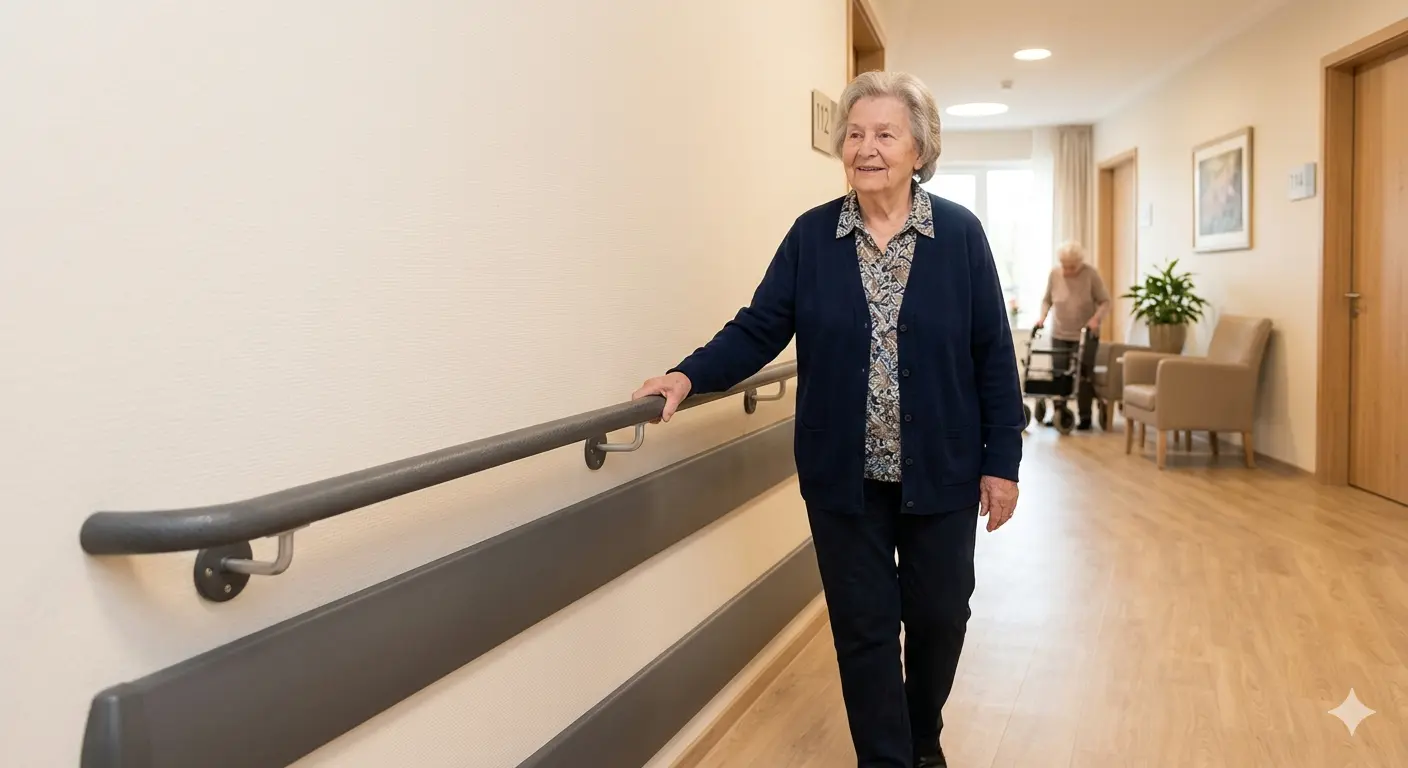
When it comes to designing or renovating a nursing home, the safety of residents is the top priority. Wall protection systems and handrails are not just architectural details; they are essential tools that provide mobility, prevent falls, and ensure a sense of independence for the elderly.
In this guide, we will explore the critical factors to consider when selecting handrails for healthcare and elderly care environments.
1. Ergonomics and Grip Diameter
The physical capabilities of elderly residents vary. A handrail that is too thick or too thin can be difficult to grasp, especially for those with arthritis.
- Ideal Diameter: According to international accessibility standards, the grip should be between 32mm and 45mm.
- Ergonomic Design: Handrails should allow for a “power grip,” where the thumb and fingers can almost meet, providing maximum stability.
2. Durability and Impact Resistance
In assisted living facilities, walls are constantly exposed to impacts from wheelchairs, stretchers, and service trolleys.
- The Hybrid Solution: Choosing a combined handrail and wall protection profile (like the NC-Series) is the most efficient choice. These systems protect the drywall from structural damage while serving as a sturdy support for walking.
3. Hygiene and Antibacterial Properties
Nursing homes must maintain clinical levels of cleanliness to protect vulnerable residents from infections.
- Material Choice: Look for vinyl (PVC) covers that are non-porous and chemical-resistant.
- Ease of Cleaning: The surface should be smooth enough to be wiped down easily with disinfectants but textured enough to prevent hands from slipping.
4. Visibility and Color Contrast
Visual impairment is common among the elderly. Handrails should not “blend in” with the wall.
- Contrast: Use colors that contrast sharply with the wall color (e.g., a dark grey or blue handrail on a light beige wall). This helps residents locate the support quickly in an emergency.
- Luminance Contrast Value (LRV): Aim for at least a 30% difference in light reflectance between the rail and the wall.
5. Compliance with Safety Standards
Ensure that the products you install meet local and international building codes (such as ADA or European standards). Key technical requirements include:
- Continuous Surface: The handrail should be continuous, without sharp edges or interruptions.
- Load-Bearing Capacity: The mounting brackets must be strong enough to support the full weight of an adult during a sudden fall.
Why Choose Inotect Wall Protection Systems?
At Inotect, we specialize in high-quality wall protection and handrail systems designed specifically for high-traffic healthcare environments. Our products offer:
- Antibacterial Surfaces: Extra protection against germs.
- Wide Color Range: Aesthetic solutions that meet contrast requirements.
- Easy Installation: Durable aluminum cores with impact-resistant decorative covers.
Conclusion
Choosing the right handrail for a nursing home is a balance between safety, hygiene, and aesthetics. By investing in ergonomic and durable systems, you not only protect your building’s infrastructure but, more importantly, you enhance the quality of life for your residents.
Are you looking for the perfect handrail solution for your project? Contact Us!